
Olivia Dean just did what the biggest artists in the world routinely avoid: she took on Ticketmaster publicly, and won.
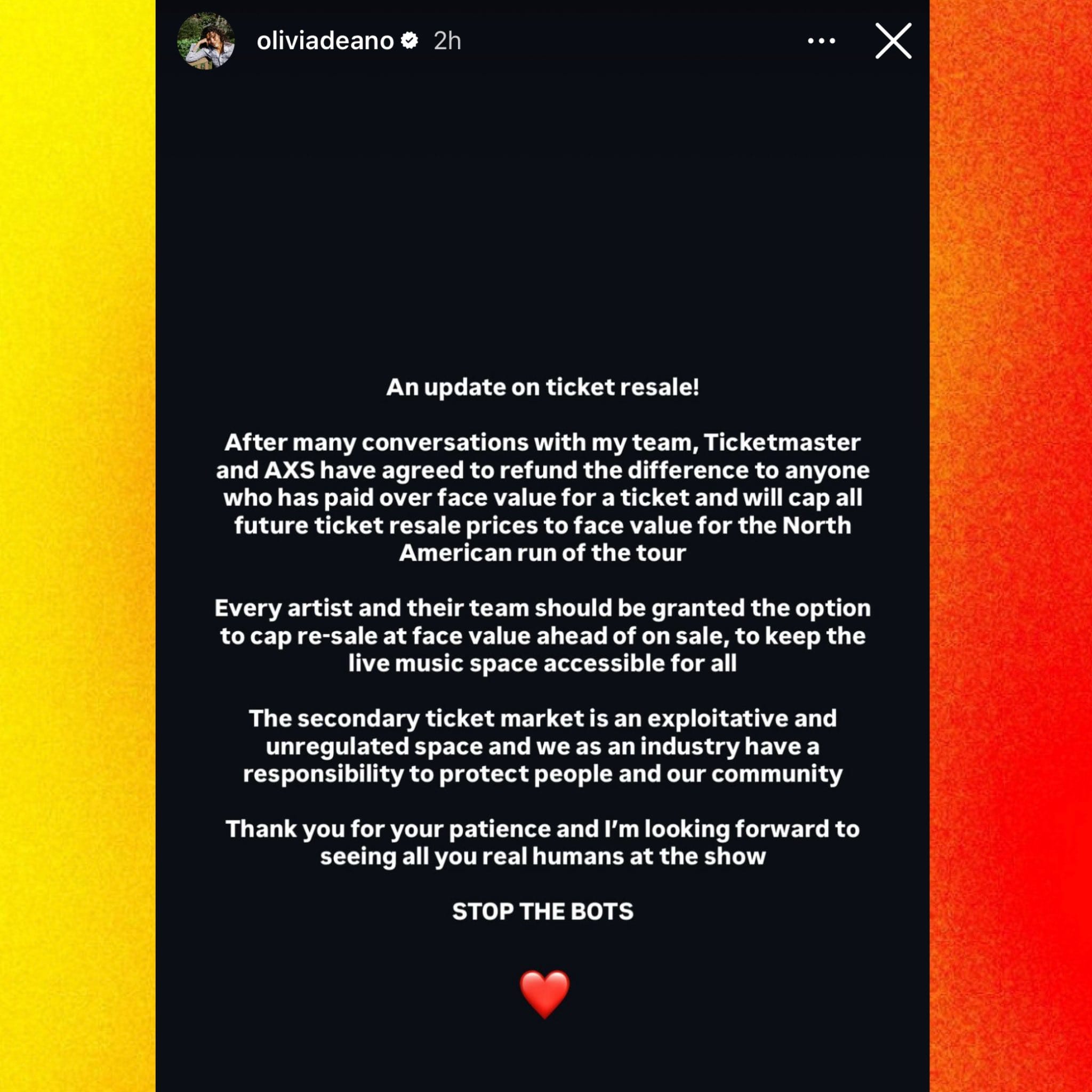
After the singer blasted Ticketmaster, Live Nation, and AEG for allowing “vile” price-gouging on resale tickets for her The Art of Loving tour, the ticketing monopoly have now agreed to cap resale prices and refund fans the difference between face value and inflated resale costs. The refunds cover any fans who unknowingly purchased marked-up resale tickets directly through Ticketmaster and AXS.
It’s a rare victory in an industry where fans have become accustomed to feeling powerless. And it begs the unavoidable question:
If Olivia Dean can force Ticketmaster to change, why can’t artists with exponentially more power, like Taylor Swift or Beyoncé, do the same for their fans?
Dean Called Out Ticketmaster Openly, and Ticketmaster Folded
On November 21, Dean publicly condemned Ticketmaster on Instagram:
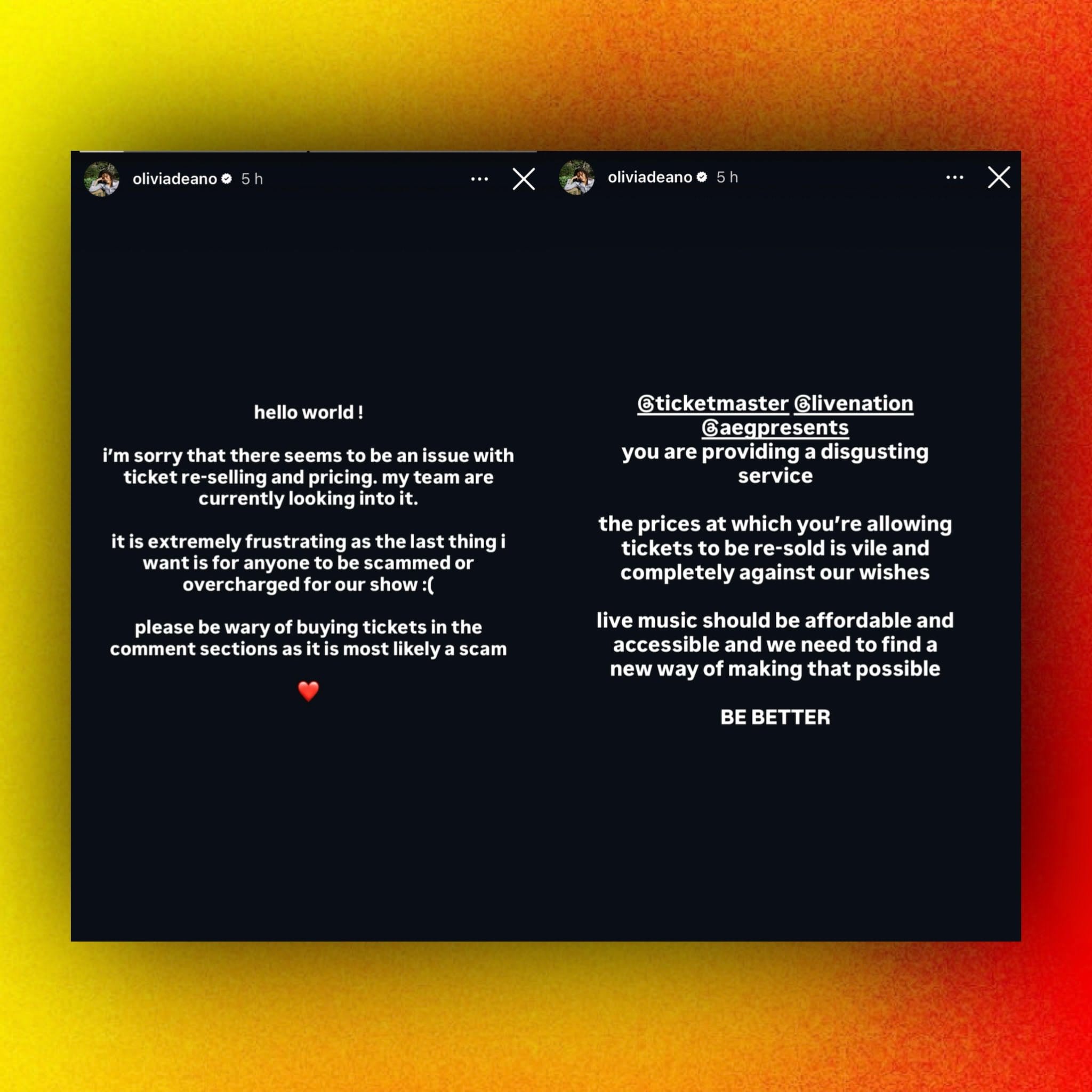
“The prices at which you’re allowing tickets to be re-sold is vile and completely against our wishes. Live music should be affordable and accessible… BE BETTER.”
Five days later, Ticketmaster caved. In a statement titled “Ticketmaster Supports Olivia Dean’s Commitment to Fair Ticket Pricing,” the company promised:
- Resale caps with no extra fees
- Partial refunds for fans who overpaid due to resale markups
- Refunds processed by December 10
- Ticketmaster (not resellers) covering the cost
CEO Michael Rapino even praised Dean’s stance, saying the company wants to “lead by example.”
But the line that sticks is this:
“We can’t require other marketplaces to honor artists’ resale preferences.”
Translation: Ticketmaster is only doing this because the artist demanded it.
So Why Don’t Taylor Swift, Beyoncé, or Other Superstars Demand the Same?
Why don’t the world’s biggest artists—Taylor Swift, Beyoncé, and others with unmatched leverage—demand the same level of accountability?
Fans argue that the silence isn’t accidental. Many believe these superstars are simply too embedded in the very system being criticized, benefiting from the VIP markups, dynamic pricing models, and inflated tiers that keep tours enormously profitable.
Some critics go further, suggesting that artists at this echelon have become part of the machinery itself, with no incentive to challenge practices that enrich them. Beyoncé’s proximity to Live Nation through Jay-Z’s long-standing business partnerships is often raised as an example of how deeply intertwined top-tier acts are with the corporate forces shaping the industry.
Whether viewed as complacency or outright complicity, the contrast is hard to ignore: while a rising artist is openly fighting to protect fans, while the biggest names, the ones with the most leverage, stay silent.