
Sports anime is one of the most beloved and enduring genres in anime. Yet most titles in the genre follow a remarkably consistent template: a talented player joins a team, forges deep bonds with teammates, overcomes setbacks through collective effort, and ultimately achieves victory through cooperation, trust, and mutual respect. Haikyuu!!, Kuroko’s Basketball, Ace of Diamond, Ao Ashi, and Slam Dunk have all built their appeal on some variation of this blueprint.
Blue Lock was expected to follow the same formula. Instead, it dismantled it entirely.
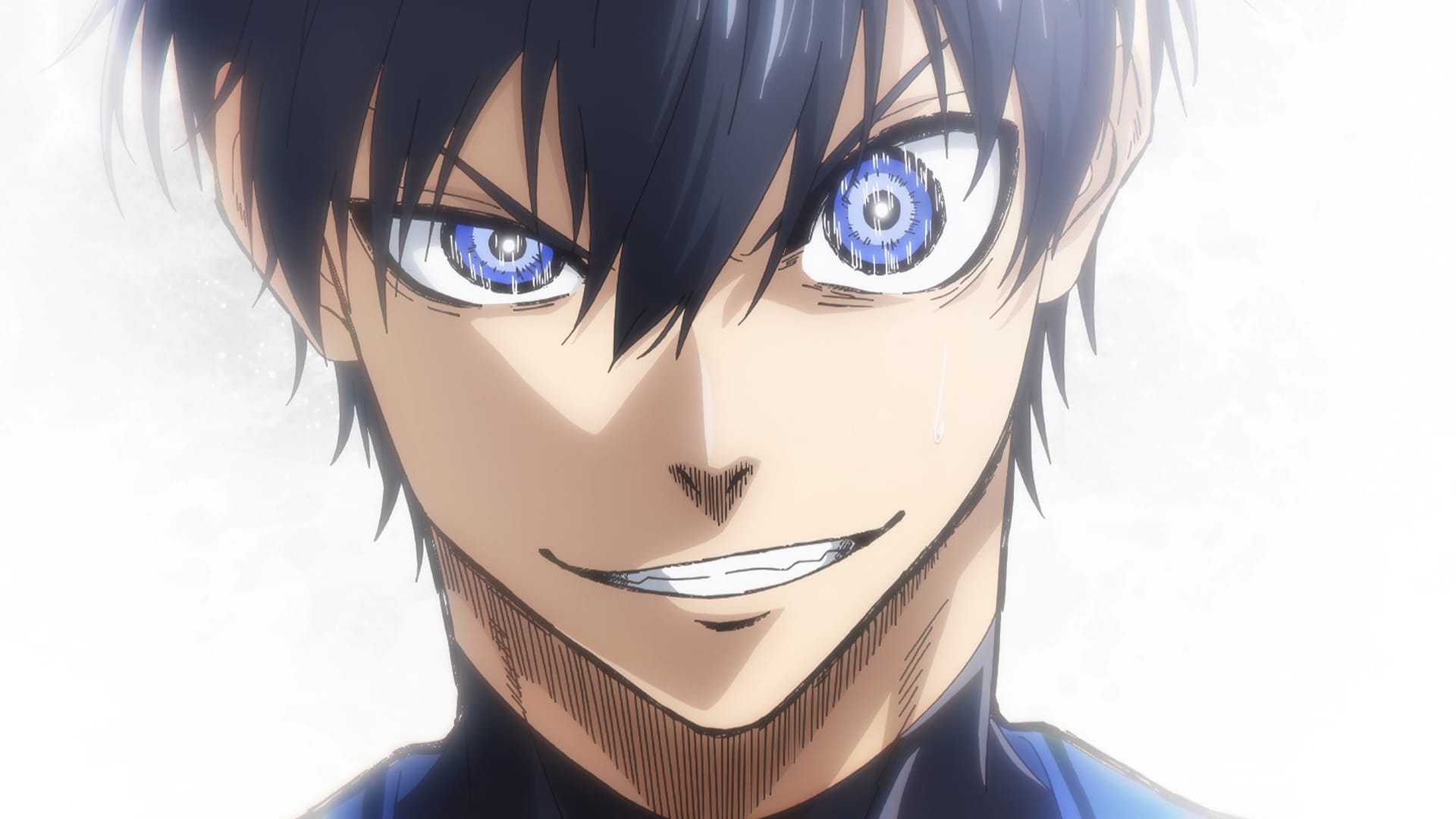
The Core Philosophy: Ego Over Everything
Despite being centred on football — a sport that demands extensive teamwork and communication — Blue Lock anime actively rejects the concept of co-operation. In most sports anime, the protagonist cannot reach their goal without the support of their teammates. Blue Lock is fixated on the exact opposite idea: the concept of ‘I’. Every player is expected to play for themselves and their own ego. In fact, the very first episode eliminates the character who advocates for a collaborative ideology, signalling clearly that this is not that kind of show. The only question that matters here is: how will I become the best striker in the world?
Blue Lock’s core argument is that selfishness is a prerequisite for greatness, at least in the striker’s position. It is a provocative premise for a team sport, and it is executed with commitment and conviction.
No Second Chances: The Brutal Elimination Format
Conventional sports anime tend to follow a predictable arc. The team trains, enters tournaments, suffers defeat, learns and grows, then returns stronger. Blue Lock manga and anime have no patience for this structure. There are no second chances. If you lose, you are out. The competition is brutal and indifferent; no matter how tragic a player’s backstory is, the programme does not care. Performance is the only currency that matters.
This format creates a sense of genuine stakes that few sports anime manage to sustain. Elimination feels real. The loss of a character is not a narrative detour; it is a consequence.
Mental Chess Over Physical Dominance
Blue Lock anime also distinguishes itself by going beyond physical skill. It expects players to radically transform their mindsets. Most players in the facility are physically superior to the protagonist, Yoichi Isagi, in terms of strength and stature. Yet Isagi rises not through raw ability but through psychological evolution. He learns to read the game, anticipate the movements of those around him, and control situations through perception rather than power. Blue Lock is, at its core, a mental showdown.
Players who fail to recognise and capitalise on both their strengths and limitations are eliminated, even when their physical abilities are superior. Director Ego Jinpachi understands this, and he constantly attempts to stimulate players psychologically, framing football as something closer to predatory hunting — triggering primal, competitive instincts.
The anime does occasionally drift away from football realism, with characters entering highly dramatised ‘flow states’ that have almost supernatural visual representations: Isagi’s spatial distortions, Rin’s destroyer flow, Bachira’s monster. These interactions feel like life-or-death confrontations, and the exaggeration is deliberate; it is what makes Blue Lock feel more like a battlefield than a pitch.
Blue Lock vs Haikyuu and the Traditional Sports Hero
The treatment of the protagonist himself is one of the most unusual elements of Blue Lock. In Haikyuu!!, Hinata is driven by joy and the desire to play alongside others. In Kuroko’s Basketball, Kuroko is motivated by team spirit and friendship. In SK8 the Infinity, Reki’s passion is fundamentally communal. Isagi’s trajectory is entirely different.
Rather than growing through connection, Isagi grows by analysing opponents, absorbing their techniques, and adapting them into his own expanding repertoire. At times, his inner monologue and decision-making process feel less like those of a typical hero and more like those of an antagonist — cold, calculating, and ruthless. His evolution from a team-oriented, self-sacrificing player before Blue Lock to a competitor who will deliberately crush another player’s dream to advance his own reads like a villain’s origin story told from the inside. In a genre built on the idea that the hero wins by building relationships, Blue Lock builds a hero who wins by manufacturing competition.
Friendships and partnerships do exist within the Blue Lock facility, but they are secondary to individual ambition. Alliances are transactional. Even midfielders refuse to pass simply out of goodwill; they pass to the position with the highest probability of a goal. An ally remains an ally only for as long as they possess something worth taking. Players must constantly evolve or be left behind by the very people who once chose them.
Ego Jinpachi’s argument, woven throughout the Blue Lock manga and anime, is that Japanese football culture has historically prioritised harmony, self-sacrifice, and collective passing over individual brilliance. Even if you fundamentally disagree with Blue Lock’s philosophy, it is impossible to deny that it offers something genuinely new in the sports anime landscape. Teamwork and collaboration — traditionally the genre’s highest virtues — are recast here as weaknesses. Blue Lock does not ask whether you can work with others. It asks whether you are strong enough to stand alone.